The builders
Two permaculturalists.
One shared vision.
Maja and Asdrubal each came to permaculture independently — before they met, before Casa Arkaana existed. When they found each other, they found the land.
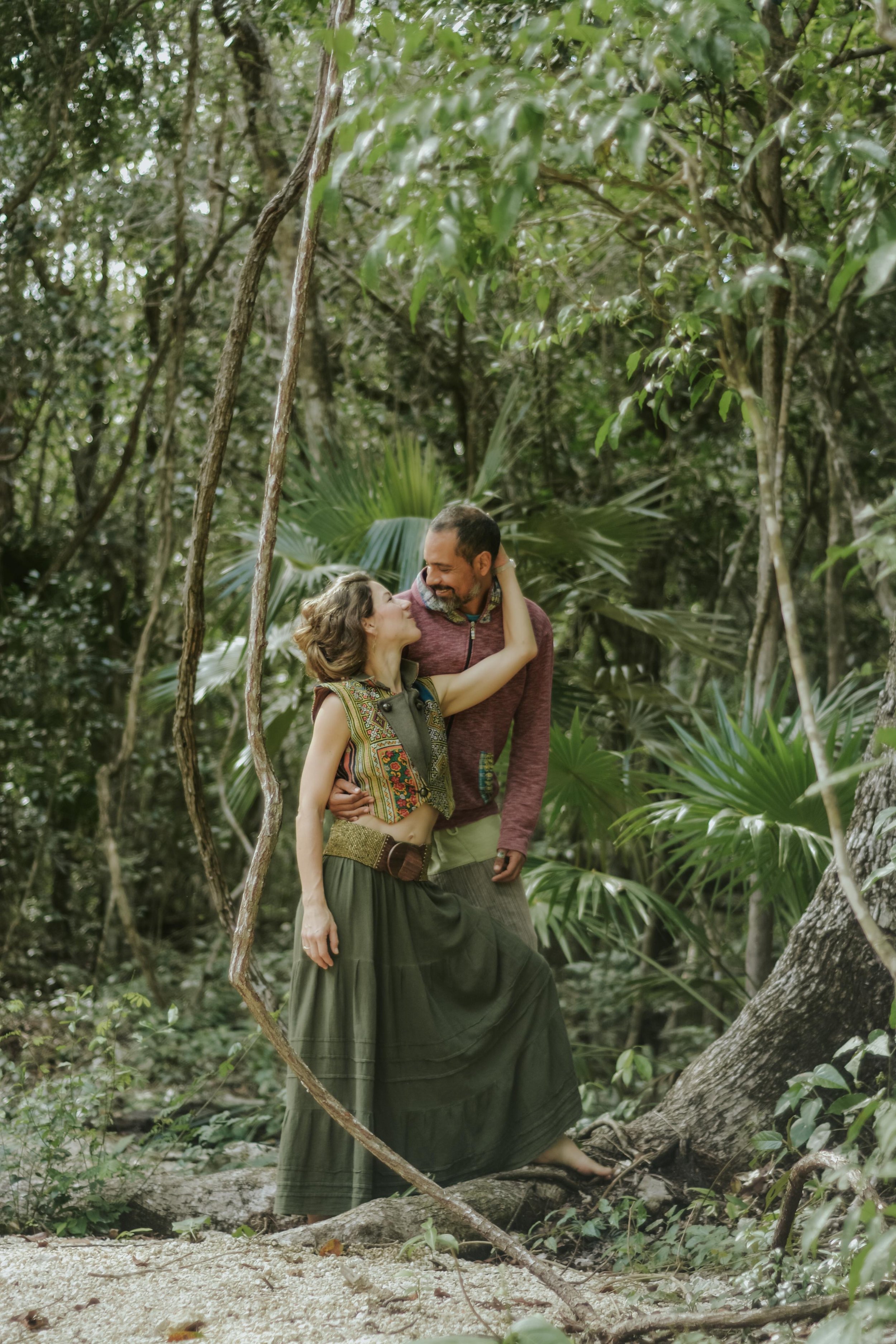
Asdrubal
Co-founder · Builder · Permaculture Designer
Certified in permaculture design at Kukui Farm in Bali — under the son of the Green School founder — in 2015. Trained in bamboo construction, cob building, animal-plant systems, and property design from zero. Seven years of off-grid living in California shaped his deep understanding of solar systems, water management, and natural building. At Casa Arkaana, he designed and built everything with his hands.
Kukui Farm, Bali
Natural building
7yr off-grid CA
Water systems
Maja
Co-founder · Facilitator · Community Builder
Completed a Permaculture Design Course in India — independently, before meeting Asdrubal. She has lived in permaculture farms and communities across multiple continents, carrying the principles not just as design knowledge but as a way of life. At Casa Arkaana, she holds the human ecosystem: the community, the retreats, the relationships, the vision.
PDC India
Community living
Retreat facilitation
Holistic hosting